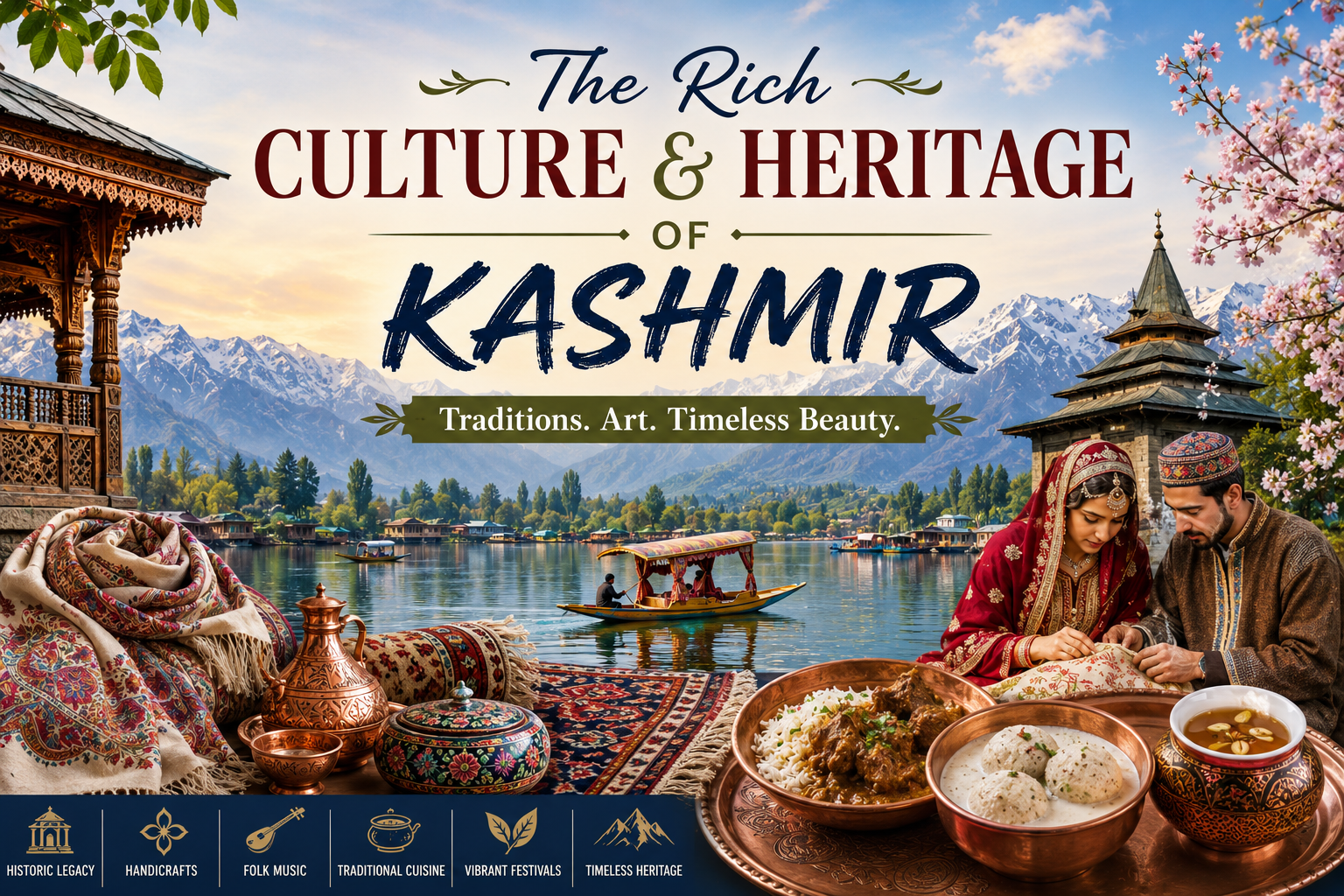
Kashmir is often admired for its breathtaking mountains, pristine lakes, and picturesque valleys, but beyond its natural beauty lies a rich cultural and historical heritage that has evolved over centuries. Known as the “Paradise on Earth,” Kashmir has been home to diverse communities, traditions, languages, religions, and artistic expressions that together form a unique cultural identity. From centuries-old shrines and temples to exquisite handicrafts and flavorful cuisine, every aspect of Kashmir reflects its remarkable history and vibrant traditions.
Today, Kashmir continues to preserve its heritage while embracing modern development, making it a fascinating destination for travelers, historians, and culture enthusiasts alike.
A Land of Historical Significance
Kashmir has a long and fascinating history dating back thousands of years. The region has witnessed the influence of ancient Hindu kingdoms, Buddhist traditions, Islamic culture, and later Mughal rulers. These historical influences have shaped Kashmir’s architecture, literature, customs, and daily life.
Historic temples, mosques, shrines, forts, and gardens across the valley continue to showcase the region’s remarkable architectural and cultural legacy.
Traditional Kashmiri Lifestyle
The traditional lifestyle of Kashmir reflects simplicity, hospitality, and a deep connection with nature. Families often follow customs that have been passed down through generations, preserving local traditions while adapting to modern times.
Traditional wooden houses, beautifully decorated interiors, handcrafted furniture, and community gatherings remain important aspects of Kashmiri life.
Famous Kashmiri Handicrafts
Kashmir is internationally recognized for its exceptional craftsmanship. Skilled artisans spend months creating handmade products that are admired around the world.
Some of the most famous handicrafts include:
- Pashmina shawls
- Handwoven carpets
- Walnut wood carving
- Papier-mâché art
- Copperware
- Chain-stitch embroidery
- Sozni embroidery
- Traditional woolen garments
These crafts not only preserve centuries-old traditions but also support thousands of local artisans.
Traditional Kashmiri Cuisine
Kashmiri cuisine is one of the richest culinary traditions in India. Prepared with aromatic spices and traditional cooking techniques, local dishes are known for their unique flavors and cultural significance.
Popular dishes include:
- Rogan Josh
- Gushtaba
- Yakhni
- Dum Aloo
- Modur Pulao
- Haak Saag
- Nadru Yakhni
- Kahwa
- Noon Chai
Food plays an important role during festivals, weddings, and family celebrations.
Festivals and Celebrations
Kashmir celebrates numerous cultural and religious festivals throughout the year. These occasions bring communities together and highlight the region’s rich traditions.
Some widely celebrated festivals include:
- Eid-ul-Fitr
- Eid-ul-Adha
- Navroz
- Shivratri (Herath)
- Baisakhi
- Independence Day celebrations
- Republic Day celebrations
- Local cultural festivals
These events feature traditional clothing, music, delicious food, and community gatherings.
Music and Folk Traditions
Music has always been an essential part of Kashmiri culture. Traditional folk songs, Sufi music, and regional instruments continue to preserve the valley’s artistic heritage.
Cultural performances often include traditional dances, storytelling, and musical gatherings during festivals and social occasions.
Traditional Dress
Traditional clothing reflects Kashmir’s climate and cultural identity.
Men commonly wear the Pheran, a loose woolen garment that provides warmth during winter.
Women also wear beautifully embroidered Pherans along with elegant jewelry and colorful headscarves during festivals and celebrations.
Traditional attire remains popular during cultural events and special occasions.
Architectural Heritage
Kashmir’s architecture beautifully combines ancient craftsmanship with regional influences.
Notable examples include:
- Wooden mosques
- Historic temples
- Mughal gardens
- Stone bridges
- Traditional homes
- Heritage shrines
Intricate woodwork, sloping roofs, carved windows, and beautiful gardens showcase the region’s architectural excellence.
Importance of Preserving Heritage
Preserving Kashmir’s cultural heritage is essential for future generations. Traditional arts, languages, music, architecture, and local customs represent valuable aspects of the region’s identity.
Preserving heritage is essential for maintaining the cultural identity, history, and traditions of a community. Heritage sites, traditional arts, languages, and customs provide valuable connections to the past and help future generations understand their roots. In regions like Kashmir, heritage preservation protects centuries-old architecture, crafts, music, and cultural practices that represent the unique character of the people. It also supports local communities by creating opportunities through tourism, handicrafts, and cultural activities. Protecting heritage encourages respect for diversity and strengthens social connections among different generations. Modern development should go hand in hand with conservation efforts to ensure that historical treasures are not lost. By investing in restoration, education, and awareness programs, societies can preserve their cultural wealth while sharing it with the world. Heritage is not only a reminder of the past but also a foundation for building a meaningful and connected future
Government agencies, cultural organizations, educational institutions, and local communities continue working to protect historical monuments, encourage traditional craftsmanship, and promote cultural tourism.Young people are also increasingly participating in preserving local traditions through cultural festivals, digital storytelling, and heritage awareness programs.
Cultural Tourism
Cultural tourism has become an important part of Kashmir’s economy. Visitors are increasingly interested in exploring local traditions beyond scenic landscapes.
Tourists enjoy:
- Heritage walks
- Museum visits
- Artisan workshops
- Traditional cuisine
- Local markets
- Cultural festivals
- Historical monuments
- Village experiences
These experiences help visitors better understand Kashmir’s unique identity while supporting local communities.
Future of Kashmir’s Cultural Heritage
Modern technology, digital documentation, educational initiatives, and responsible tourism are helping preserve Kashmir’s traditions in new ways. As awareness grows, more people are recognizing the importance of protecting historical sites, supporting local artisans, and celebrating traditional art forms. Continued collaboration between communities, cultural organizations, and government institutions will ensure that Kashmir’s rich heritage remains vibrant and accessible for future generations.
The future of Kashmir’s cultural heritage depends on preserving its traditions while embracing modern opportunities. Efforts to protect historic sites, promote traditional crafts, and support local artists can help safeguard the region’s unique identity for future generations. Digital documentation, cultural education, and responsible tourism can play an important role in keeping Kashmir’s languages, music, handicrafts, and festivals alive. Young generations can contribute by learning traditional skills and connecting heritage with modern creativity. Sustainable development practices can ensure that natural landscapes and cultural landmarks remain protected. By balancing conservation with innovation, Kashmir can continue to celebrate its rich history while creating new opportunities for communities. The future of Kashmir’s cultural heritage lies in collective efforts from residents, organizations, and visitors who value its centuries-old traditions and work together to preserve its beauty, diversity, and cultural legacy.
Conclusion
Kashmir’s culture and heritage are as extraordinary as its natural landscapes. The region’s centuries-old traditions, magnificent architecture, skilled craftsmanship, delicious cuisine, vibrant festivals, and warm hospitality create a cultural identity unlike any other. Every handmade craft, historic monument, traditional song, and local celebration tells a story of resilience, creativity, and pride. Preserving these traditions is essential not only for safeguarding history but also for inspiring future generations to appreciate and continue Kashmir’s remarkable legacy. Whether visiting ancient heritage sites, tasting authentic Kashmiri cuisine, or interacting with local artisans, exploring Kashmir’s culture offers a meaningful journey into one of India’s richest and most treasured cultural landscapes.
Disclaimer
This article is for informational purposes only.