A healthy lifestyle is not just about following strict diets or spending hours at the gym. It is a balanced approach that includes physical activity, mental wellness, proper nutrition, quality sleep, and positive daily habits. In today’s busy world, many people struggle to maintain healthy routines because of work pressure, technology use, and irregular schedules. However, small lifestyle changes can create a significant impact on overall health and happiness.
Building healthy habits does not require major transformations overnight. Simple actions like eating nutritious foods, staying active, managing stress, and creating a better sleep routine can help improve energy levels and long-term well-being. A mindful lifestyle allows individuals to stay productive, confident, and physically stronger.
Importance of a Healthy Lifestyle
A healthy lifestyle plays an important role in preventing many health problems and improving quality of life. When people take care of their bodies and minds, they experience better concentration, improved mood, and increased energy. Healthy habits support the immune system, strengthen the body, and help maintain emotional balance.
Lifestyle choices affect every aspect of life, including physical health, relationships, productivity, and personal growth. Developing positive routines can help people feel more motivated and prepared to handle daily challenges.
Maintain a Balanced Diet
Nutrition is one of the most important parts of a healthy lifestyle. A balanced diet provides the body with essential vitamins, minerals, proteins, and nutrients needed for proper functioning. Including fresh fruits, vegetables, whole grains, lean proteins, and healthy fats can improve overall health.
Avoiding excessive consumption of processed foods, sugary drinks, and unhealthy snacks can reduce the risk of lifestyle-related health issues. Eating meals at regular times and staying hydrated throughout the day also supports better digestion and energy levels.
Stay Physically Active
Regular physical activity is essential for maintaining a healthy body. Exercise helps improve heart health, strengthens muscles, supports weight management, and boosts mental well-being. People do not always need intense workouts to stay active. Walking, cycling, yoga, stretching, and simple home exercises can also provide significant benefits.
Making movement a part of daily life can improve flexibility, reduce stress, and increase overall fitness. Choosing activities that are enjoyable makes it easier to maintain consistency.
Prioritize Quality Sleep
Sleep is often ignored in modern lifestyles, but it is essential for physical and mental recovery. Poor sleep habits can affect concentration, mood, immunity, and energy levels. Adults should focus on maintaining a regular sleep schedule and creating a comfortable sleep environment.
Reducing screen time before bed, avoiding heavy meals late at night, and practicing relaxation techniques can improve sleep quality. Proper rest helps the body repair itself and prepares the mind for the next day.
Focus on Mental Health and Stress Management
Mental health is a key part of overall wellness. Daily stress from work, responsibilities, and personal challenges can affect emotional balance. Practicing mindfulness, meditation, deep breathing exercises, or spending time with loved ones can help manage stress.
Maintaining hobbies, expressing emotions, and taking breaks when needed can support better mental health. A positive mindset and healthy coping methods help individuals handle difficulties more effectively.
Create Healthy Daily Routines
Consistency is the foundation of a healthy lifestyle. Creating simple routines can make healthy choices easier to follow. Planning meals, setting fitness goals, organizing daily tasks, and maintaining personal hygiene are important habits that contribute to better health.
Small improvements made regularly can lead to long-term benefits. Instead of focusing on perfection, individuals should aim for progress and create habits that fit their lifestyle.
Limit Unhealthy Lifestyle Choices
Certain habits can negatively impact health over time. Excessive alcohol consumption, smoking, lack of physical activity, and poor eating patterns can increase health risks. Making conscious decisions to reduce harmful habits can improve both physical and emotional well-being.
Replacing unhealthy choices with positive alternatives can gradually create a healthier lifestyle. For example, choosing water instead of sugary drinks or taking a walk instead of spending extra time on screens can make a difference.
Build Strong Social Connections
Healthy relationships contribute to emotional happiness and mental wellness. Spending quality time with family, friends, and supportive communities can reduce stress and improve confidence.
Social connections provide encouragement and motivation during challenging times. A balanced lifestyle includes not only taking care of the body but also nurturing meaningful relationships.
Practice Self-Care Regularly
Self-care is an important part of maintaining a healthy lifestyle. It involves taking time to relax, recharge, and focus on personal needs. Self-care activities may include reading, exercising, enjoying nature, practicing hobbies, or simply taking moments of rest.
When individuals care for themselves, they become better equipped to manage responsibilities and support others. Self-care should be viewed as a necessary part of a balanced life rather than a luxury.
The Role of Technology in Healthy Living
Technology can support healthier lifestyle choices when used wisely. Fitness applications, health trackers, online workout programs, and nutrition tools can help people monitor progress and stay motivated.
However, excessive screen time can negatively affect sleep, posture, and mental health. Maintaining a healthy balance between digital activities and real-world experiences is important for overall wellness.
Conclusion
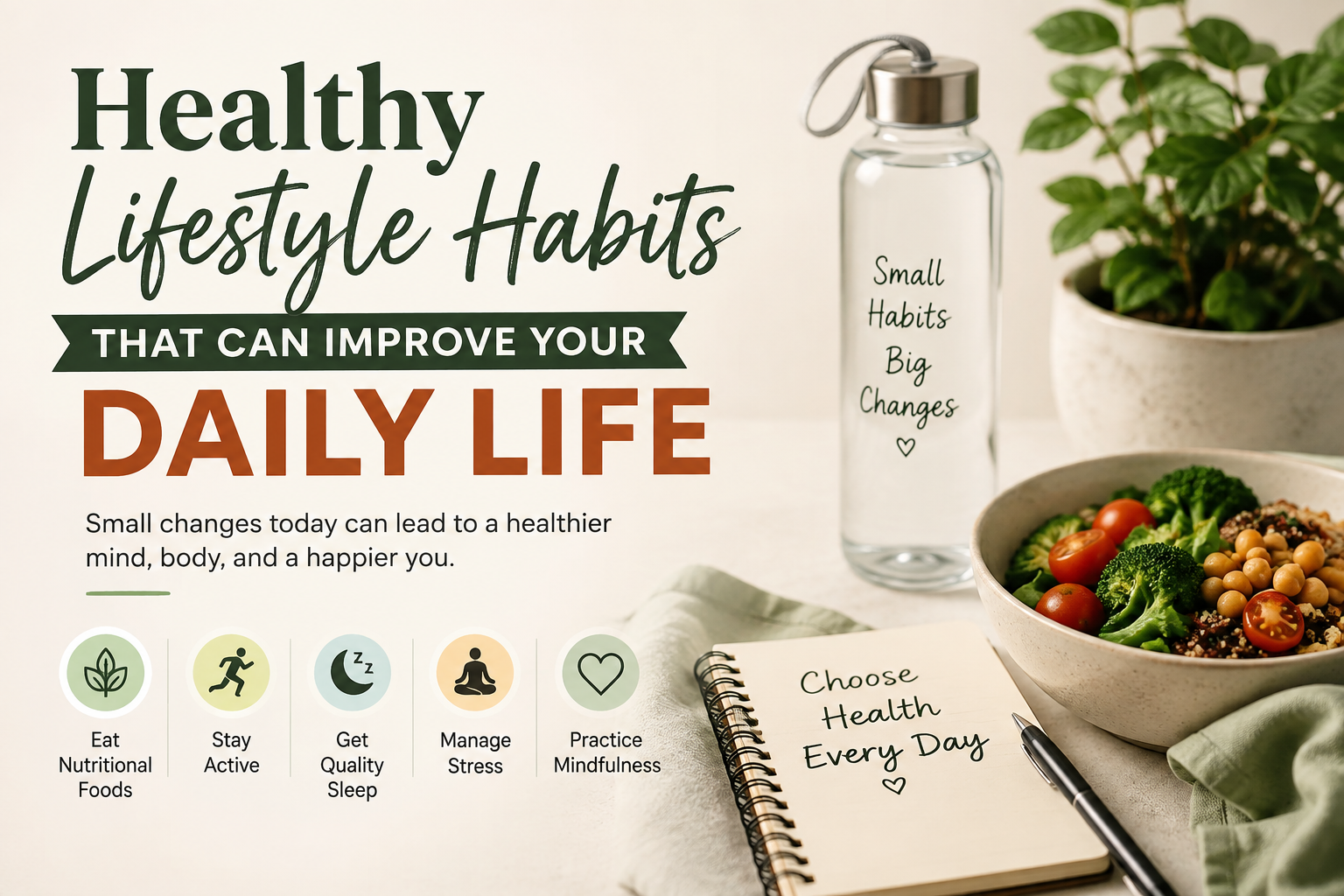
A healthy lifestyle is created through consistent choices and positive habits. Eating nutritious foods, staying active, sleeping well, managing stress, and maintaining strong relationships all contribute to better health and happiness. Even small lifestyle changes can create meaningful improvements over time.
Health is not only about avoiding illness but also about building a life filled with energy, confidence, and balance. By adopting healthier routines and making mindful decisions, individuals can improve their quality of life and enjoy long-term wellness.
Disclaimer
This article is for informational purposes only.