Introduction
India’s cultural heritage is a beautiful reflection of its diverse history, traditions, and communities. From colorful festivals and traditional music to ancient crafts and folk dances, every region of the country carries a unique cultural identity. These traditions have been passed down through generations, connecting people with their roots and preserving stories of the past. In today’s rapidly changing world, protecting folk traditions has become more important than ever. Cultural heritage not only represents history but also strengthens community bonds and promotes a deeper understanding of diversity.
The Rich Diversity of Indian Folk Culture
India’s folk culture is a collection of countless traditions developed over centuries. Every state has its own unique forms of art, music, dance, and storytelling. Folk traditions often represent the daily lives, beliefs, and experiences of local communities.
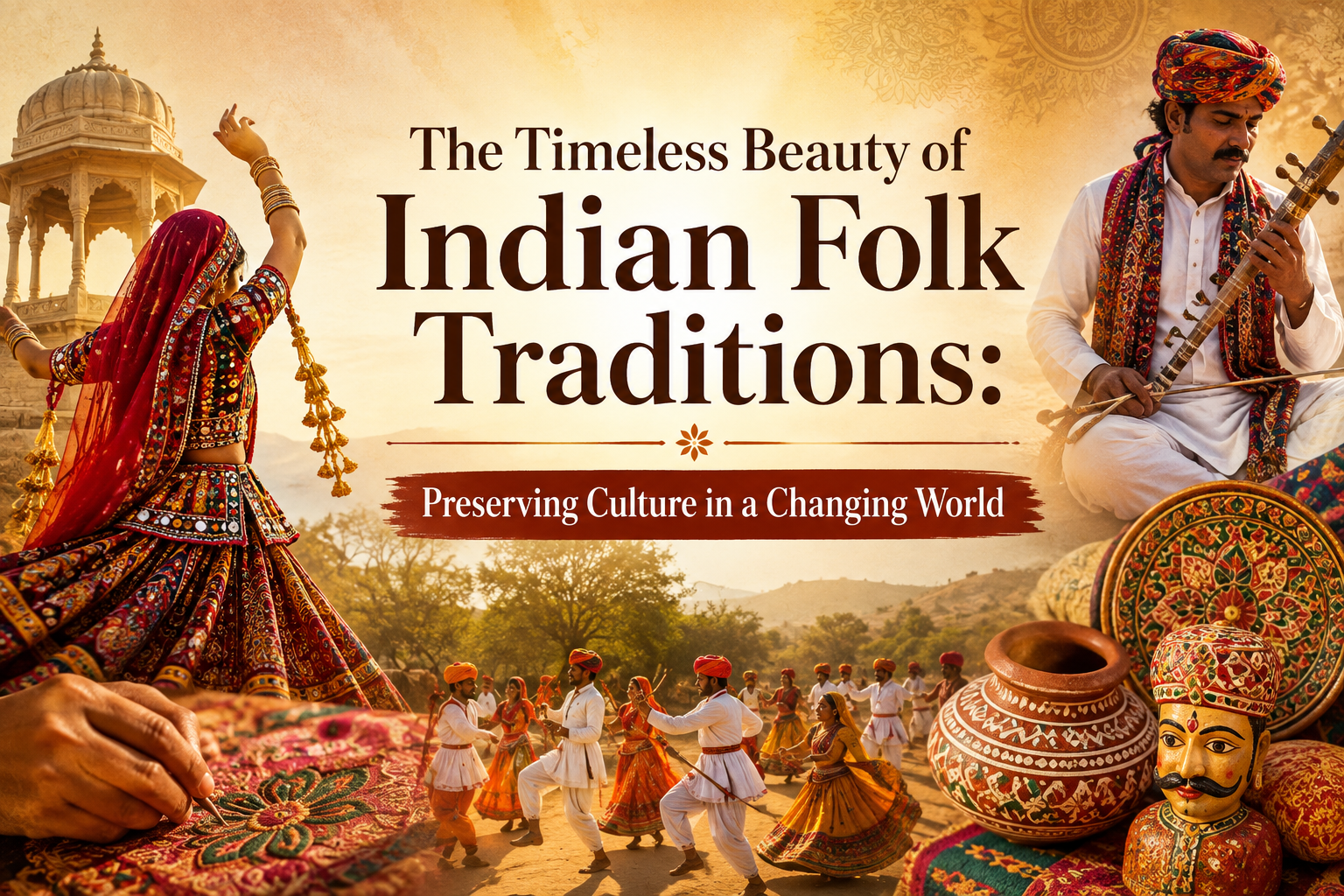
Traditional dances such as Bhangra from Punjab, Garba from Gujarat, Kathakali from Kerala, and Ghoomar from Rajasthan showcase the artistic expressions of different regions. These performances are not only sources of entertainment but also preserve historical stories, social values, and cultural memories.
Folk music also plays a significant role in keeping traditions alive. Local songs often describe nature, festivals, love, celebrations, and struggles of ordinary people. Instruments made using traditional methods add a special charm to these musical forms.
Importance of Traditional Arts and Handicrafts
Indian handicrafts are an important part of the country’s cultural heritage. Skilled artisans create beautiful products using techniques that have been developed over generations. Handloom textiles, pottery, wood carving, embroidery, and traditional paintings represent the creativity and dedication of local craftsmen.
Many communities depend on handicrafts for their livelihood. Supporting traditional artisans helps preserve these skills while providing economic opportunities. When people choose handmade products, they contribute to keeping ancient techniques alive.
Traditional crafts also tell stories about regional history. The designs, patterns, and materials used often reflect local environments, beliefs, and cultural influences. Protecting these crafts ensures that future generations can experience the artistic legacy of their ancestors.
Role of Festivals in Cultural Preservation
Festivals are an important way of celebrating and preserving cultural heritage. They bring communities together and allow people to practice traditional rituals, food preparation, music, and performances.
Indian festivals such as Diwali, Eid, Christmas, Baisakhi, Pongal, and Onam represent the country’s cultural diversity. Beyond religious significance, these celebrations promote unity, social interaction, and respect for different traditions.
Local festivals also provide opportunities for younger generations to learn about their heritage. Through participation, children and young people understand the importance of cultural values and develop a connection with their history.
Challenges Facing Cultural Heritage
Despite its importance, cultural heritage faces several challenges in the modern era. Globalization, changing lifestyles, and reduced interest among younger generations can lead to the decline of traditional practices.
Many traditional artists struggle due to limited financial support and competition from mass-produced goods. Some ancient skills are disappearing because fewer people are learning these crafts.
Historical sites and cultural landmarks also require proper maintenance and protection. Without conservation efforts, valuable heritage structures may suffer damage due to environmental factors and urban development.
Technology and the Future of Heritage Preservation
Technology has created new opportunities for protecting and promoting cultural heritage. Digital archives, online exhibitions, and social media platforms help introduce traditional arts and customs to a wider audience.
Young artists and cultural organizations are using digital tools to promote traditional crafts, music, and performances. Virtual tours of historical sites allow people from around the world to explore cultural treasures without causing physical damage.
Educational programs can also use technology to teach students about heritage. By combining traditional knowledge with modern innovation, cultural preservation can become more effective and accessible.
Promoting Sustainable Cultural Tourism
Cultural tourism can play an important role in preserving heritage while supporting local communities. Visitors who explore historical sites, attend cultural festivals, and purchase traditional products contribute to the protection of local traditions.
However, tourism should be managed responsibly. Overcrowding and commercial activities can sometimes harm cultural sites. Sustainable tourism focuses on protecting heritage while creating positive experiences for visitors and residents.
By encouraging responsible travel, communities can benefit economically while ensuring that cultural treasures remain protected for future generations.
The Role of Young Generations
Young people have an important role in carrying cultural heritage forward. Learning traditional skills, participating in cultural activities, and sharing knowledge through modern platforms can help preserve traditions.
Schools and communities can encourage students to understand their cultural background through workshops, exhibitions, and heritage programs. When young generations appreciate their roots, they become active protectors of their cultural identity.The combination of traditional knowledge and modern creativity can create new ways to celebrate heritage. Young artists can introduce fresh ideas while respecting the originality of traditional practices.
Young generations play a vital role in preserving and promoting cultural heritage for the future. Their interest, participation, and understanding of traditional values help keep customs, languages, arts, and crafts alive. By learning about their history and engaging in cultural activities, young people can become responsible guardians of their community’s identity. Modern technology provides new opportunities for youth to share traditional knowledge through social media, digital platforms, and creative projects. They can support local artisans, participate in cultural events, and encourage others to appreciate heritage. Education and awareness programs can further strengthen their connection with traditions while allowing them to bring fresh ideas and innovation. The involvement of younger generations ensures that cultural practices are not forgotten but continue to evolve with time. By respecting the past and embracing the future, youth can help protect and celebrate the rich cultural heritage of their communities.
Conclusion
Indian folk traditions are valuable treasures that represent the country’s history, creativity, and diversity. Preserving cultural heritage is not only about protecting old customs but also about keeping meaningful connections between the past, present, and future. Through awareness, technology, responsible tourism, and community involvement, these traditions can continue to inspire generations. Every effort to protect heritage contributes to maintaining the cultural richness that makes each community unique. By valuing and celebrating our traditions, we ensure that the stories, skills, and memories of the past continue to live on.